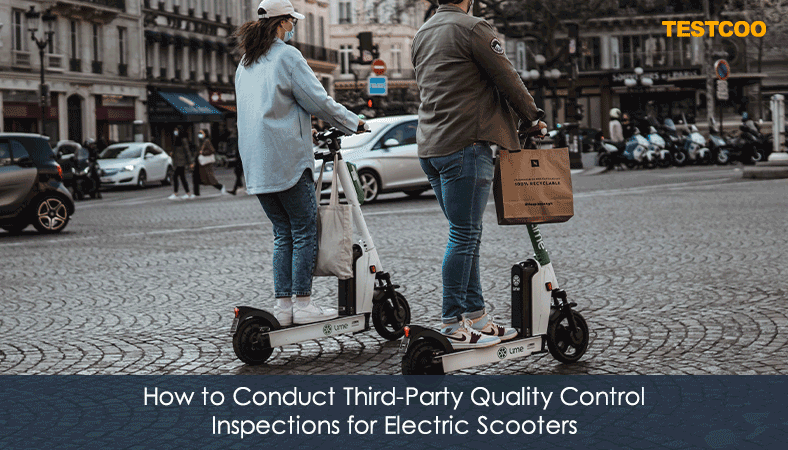
The global electric scooter market is experiencing substantial growth as governments worldwide prioritize cleaner and more efficient transportation solutions. With a projected value of USD 34.91 billion by 2030 and a CAGR of 7.00% from 2023 to 2030, the market is set to expand significantly. Governments are investing in charging infrastructure and providing incentives to buyers, presenting opportunities for OEMs to expand their revenue streams and geographic presence.
In the Asia Pacific region, the demand for energy-efficient electric two-wheelers is driving steady market growth, while the North American market is experiencing rapid expansion, especially in the high-performance E-Motorcycle segment.
Challenges such as the lack of charging infrastructure, high initial costs, and performance limitations could hinder the global market’s growth. Nonetheless, the overall trend points towards a promising future for the electric scooter and motorcycle market.
Besides, the e-scooter industry presents manufacturers and importers with the challenge of navigating complex and constantly evolving regulations. To guarantee quality, safety, and compliance, manufacturers and importers are increasingly turning to third-party quality partners-Testcoo, we can assist in navigating the intricate landscape of market regulations and ensure the products’ quality and safety.
Quality Inspections for Electric Scooters
As the popularity of e-scooter continues to rise, ensuring their quality and compliance with industry standards becomes crucial. To guarantee the highest level of quality control, companies often employ reputable inspection agencies such as Testcoo.There are, in total, 6 types of inspection in quality control:
Initial Production Check (IPC)
During Production Check (DUPRO)
Final Random Inspection (FRI)
Loading Supervision (LS)
100% Inspection
Sample Picking Service (SPS)
Today let’s look into the key aspects involved in conducting a Pre-Shipment Quality Inspection of an electric scooter factory in China. During this specific inspection, the Testcoo inspector, as per the client’s requirements, focused on the next items:
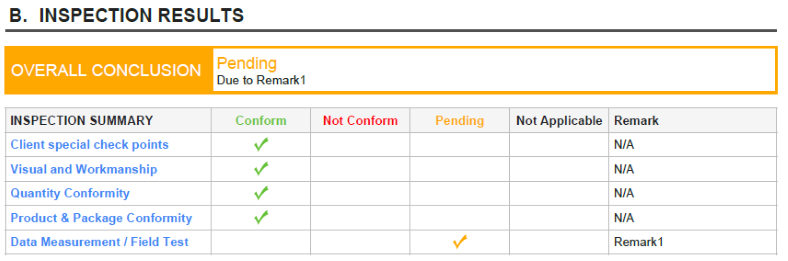
Visual and Workmanship
If no specific requirement from applicant, the inspector will visually inspect the exterior and interior parts of the electric scooter using inspection sampling plan, General Inspection Level II, AQL 1.5. 4.0. They’ll check for the following aspects, including:-Scratch marks, dirt marks, glue mark, abrasion-Defective parts
-Identify any visible defects, such as rust or metallic luster, substandard surface coating, or oil stains.
-Verification that the structure assembly aligns with the provided drawings.
-Other
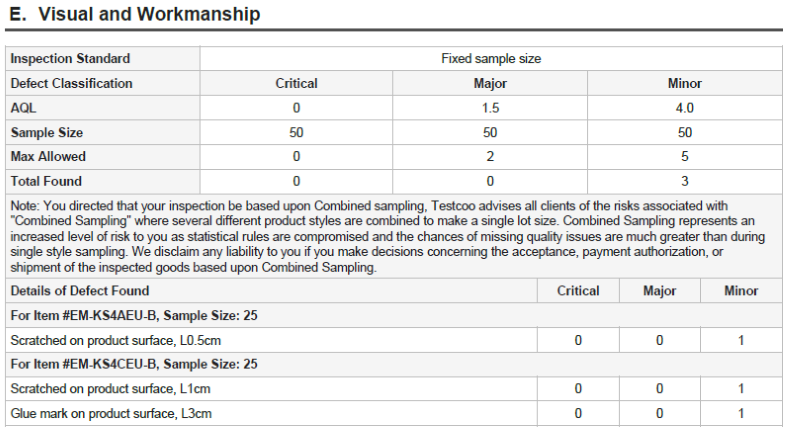
*All our reports come with high quality pictures of the detected issues
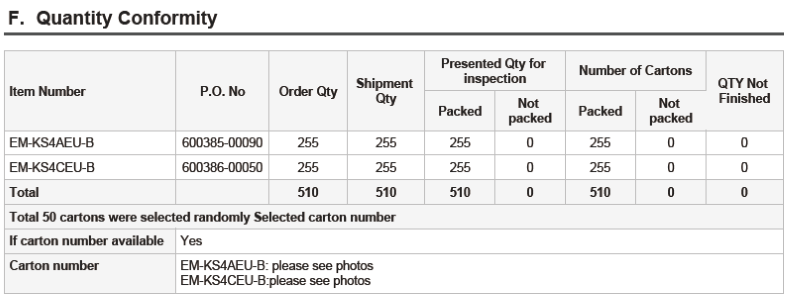
Quantity Conformity
Discrepancies in batch quantities can cause confusion, delays, and inventory tracking issues. Our inspection team conducts a thorough count and cross-checks of electric scooters ready to be delivered against purchase order documentation.They compare the shipment’s quantity to the specified order quantity, ensuring precise alignment between the two. This meticulous process guarantees accurate documentation and facilitates smooth inventory management.
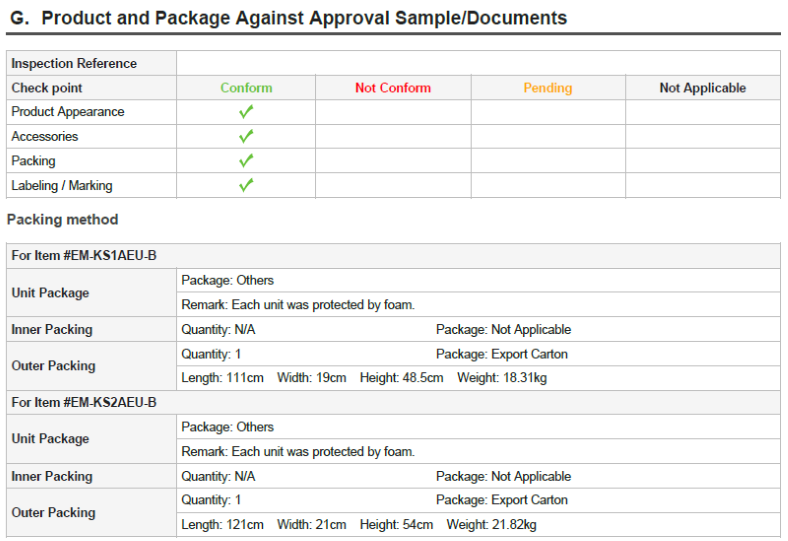
Product and Packaging Conformity
The product and packaging conformity service in Testcoo final random inspections for electric scooters includes an evaluation of the labeling and packaging aspects of the products. Reviewing the presence and accuracy of the Purchase Order, Product Specification, and User Manual.These documents provide essential information about the product, its specifications, usage instructions, and any other specific requirements requested by the client. Besides Testcoo will review other specific questions around the documentation provided by the client. It includes the next items:-Product Appearance Verification
-Accessories Verification
-Packing Verification
-Labling/ Marking Compliance
Data Measurement and Field Test Checklist
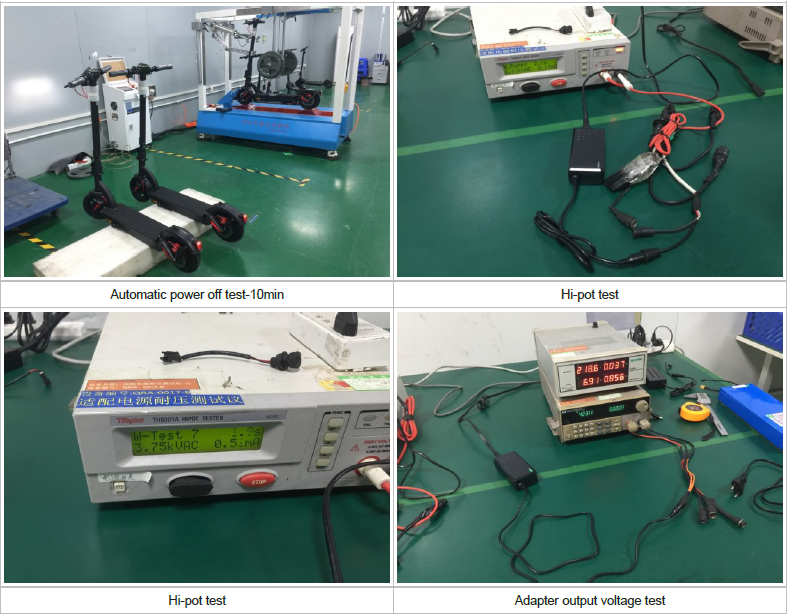
The inspection service provided by Testcoo for electric scooters in the final random inspection report includes a comprehensive range of tests and checks to ensure the quality and performance of the products. Here are the specific tests and checks conducted:
1. Transportation Drop Test
No critical & Major issue found on package & product after (10 times) drop test according to the standard of ISTA 1A.2. Product Size, Power cord length, Weight Measurement
According to product spec or approved sample. Apply +/- 3% if no detail tolerance issued or requirement from client.3. Barcode Scan Check
The barcode of the e-scooter must be scannable and with the correct number.4. Assembly, Installation Check
The assembly of the e-scooter is inspected to verify that all components are assembled smoothly according to the instruction manual or guideline, and no issue found.5. Full Function Check
All captioned function of the e-scooter is well conducted as intended in instruction manual, such as installation, adjusting, switch/knob action check, setting, display, modes setting, remote control function, actual using function etc. all of function should be complied with claims.6. Coating Adhesive Tape Test
A coating adhesive tape test of the e-scooter is measured to ensure no more than 10% area of all painting, foil stamping, UV coating, printing peel off required.7. High Voltage Test
This test checks the electrical insulation of the e-scooter by applying a high voltage to detect any potential electrical issues or safety hazards.The testing voltage required: For the USA/Canada markets: class I: 800Vac class II: 1500Vac For European markets: class I: 1500Vac class II: 2500Vac for AC adaptor: for USA/Canada markets: 1200Vac for Europe markets: class I: 2100Vac; class II: 4200Vac no insulation breakdown.
8. Power on Check
The good condition samples should be operating at full load (preferable) at least 4 hours at rated voltage or time reference the user instruction if less than 4 hours. after testing the sample e-scooter should pass the hi voltage check, function check, earth continuity check etc., and no defect found.9. Power Consumption Check or Input Power, Current Check
The e-scooter power consumption, input power, current are checked to comply with product spec and safety standards.10. Internal Workmanship and Critical Component Check
Check internal construction completement and main components of e-scooter according with CDF(Constructional Data Form) or CCL (critical components list).11. Rubbing Test for Rating Label and Adhesive Test for Printing, Marking and Logo
This test is conducted to make sure that the rating label, printing, marking, and logo don’t rub off.12. Waterproof Testing
The electric scooter undergoes testing to assess its resistance to water and verify its waterproof capabilities, this includes some specific tests like the water resistance test (IP67) and more13. Charging, Discharging Check
Charging and discharging of e-scooter are inspected to ensure it meets requirement.14. Auto-off Time Check
Auto-off time of e-scooter is checked to ensure it operates with the requirement.15. Abusing Test and Actual Performance Test
16. Basic Function Check
The basic function check of the e-scooter is evaluated, including aspects such as acceleration, braking, stability, and handling.17. Max Rang Check
18. Max Speed Check
The speed of the motor is assessed to ensure it operates within the max speeds.19. Loading Test
This check examines how the e-scooter performs when subjected to a specified load or weight capacity to ensure it functions properly under normal operating conditions.20. Climbing Angle Test
21. Handle Grips Force Pull Test
Handle grips force pull test of e-scooter is assessed to verify handles grips are not easily being pulled out or come apart.22. Handle Pull Test
23. Charger Output Voltage
Charger output voltage is inspected to verify that reaches the e-scooter voltage.By conducting these tests and checks, Testcoo ensures that the e-scooters meet the necessary quality standards, perform reliably, and comply with safety requirements, providing confidence to both manufacturers and consumers.
Conclusion: The Importance of E-Scooter Quality Inspections
In conclusion, conducting professional third-party quality inspections for e-scooters is crucial for ensuring product integrity, safety, and customer satisfaction.Throughout this article, we have explored the essential steps involved in these inspections, emphasizing the importance of engaging a reliable third-party inspection service-Testcoo.
By prioritizing professional third-party quality inspections, manufacturers and importers can foster consumer trust, meet regulatory obligations, and ultimately succeed in the competitive e-scooter market. Don’t leave the success of your e-scooter business to chance.
Contact us today to learn more about our comprehensive inspection services and how we can help you ensure the quality and compliance of your e-scooter products.
评论
发表评论